Building a startup
from scratch
to acquisition
How I designed Calyptia's entire product, brand, and design system — solo — and helped a seed-stage startup get acquired by Chronosphere.
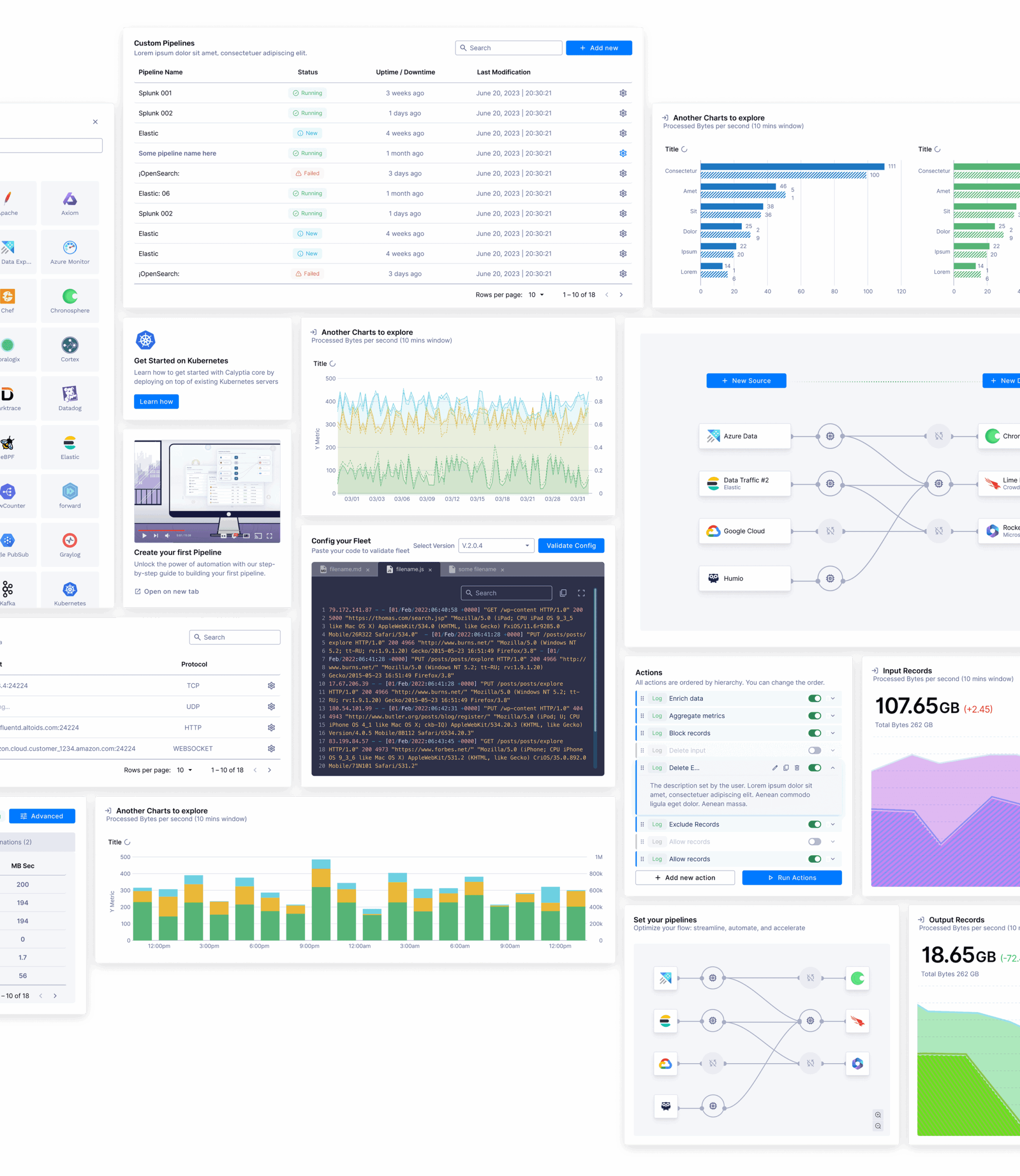
An open-source giant with no design
Calyptia was founded by Eduardo Silva and Anurag Gupta — the original creators of Fluent Bit, the most widely deployed open-source log processor in cloud-native environments, with over 12 billion downloads.
The technology was world-class. The design wasn't. When I joined in 2022, the only visual reference for the entire product was a handful of hand-drawn wireframes — rough sketches that captured intent, but nothing else.
My job: turn those sketches into a product, a brand, and a design system that could take a technical startup from seed stage to acquisition-ready.
The Starting Point
No design system. No brand guidelines. No UI components. No visual language. Just a team of engineers who had built something remarkable — and needed someone to help the world see it.
My Constraints
I was the only designer in the company. Every decision — from the product's interaction patterns to the brand's tone of voice — was mine to make and defend, directly with the founders.
“The technology had 12 billion downloads but that design had zero screens. That gap was an opportunity for me.”
Three problems,
one designer
Designing for a DevOps audience is uniquely demanding. These aren't casual users — they're engineers managing complex distributed systems under pressure. The product had to earn trust instantly.
Designing for engineers
DevOps and SRE teams distrust complexity theater and immediately see through UX that doesn't understand their workflow. I had to learn their language before I could design for them.
Product + brand simultaneously
There was no luxury of sequencing. The product needed to ship while the brand needed to be built — often in the same week, with the same bandwidth.
Making open-source feel enterprise
Fluent Bit was beloved in the dev community for its raw, technical nature. Calyptia needed to wrap that power in an experience that enterprise buyers would trust with production infrastructure.
Defining a new visual category
The observability pipeline space had no strong visual language. Competitors were technical but ugly, or polished but shallow. There was a real opportunity to define the aesthetic of the category.
How I approached it
Deep user research — listening first
Before sketching a single screen, I ran discovery sessions with DevOps and platform engineering teams. I wasn't asking about design — I was asking about their day, their pain, their language. What they called things mattered as much as what they needed. This research shaped the entire information architecture of Calyptia Core.
Product first — establish trust through UI
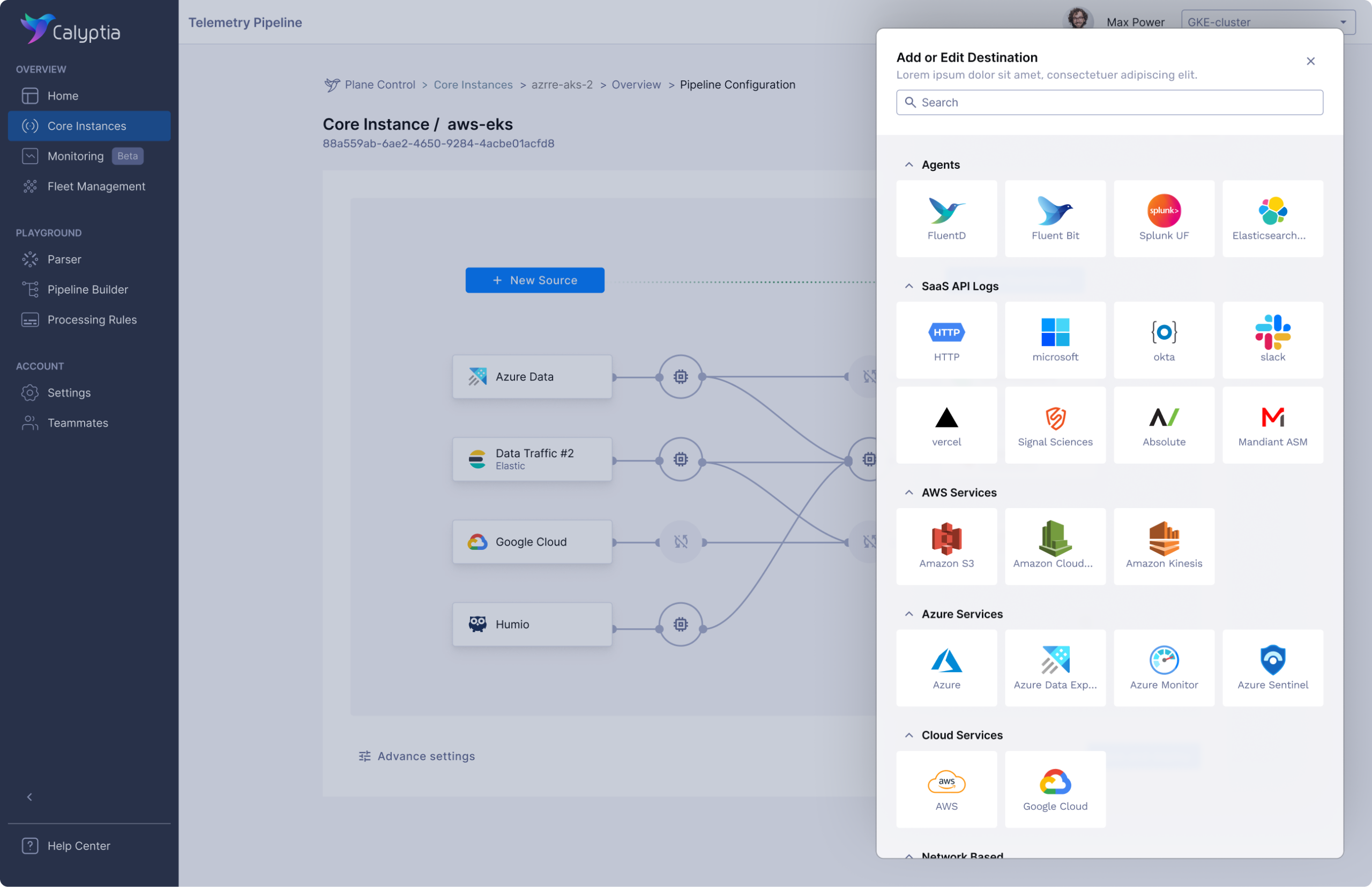
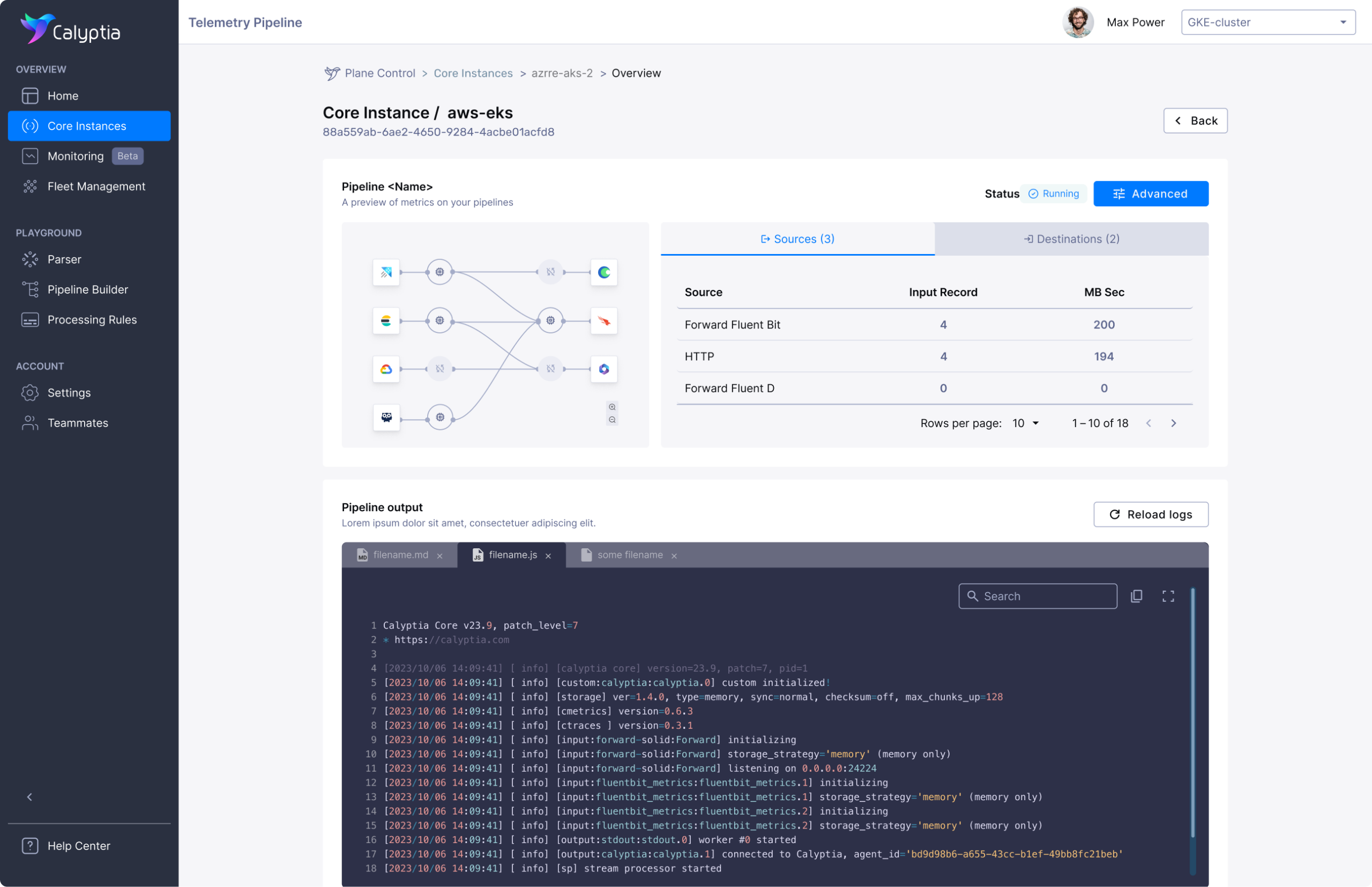
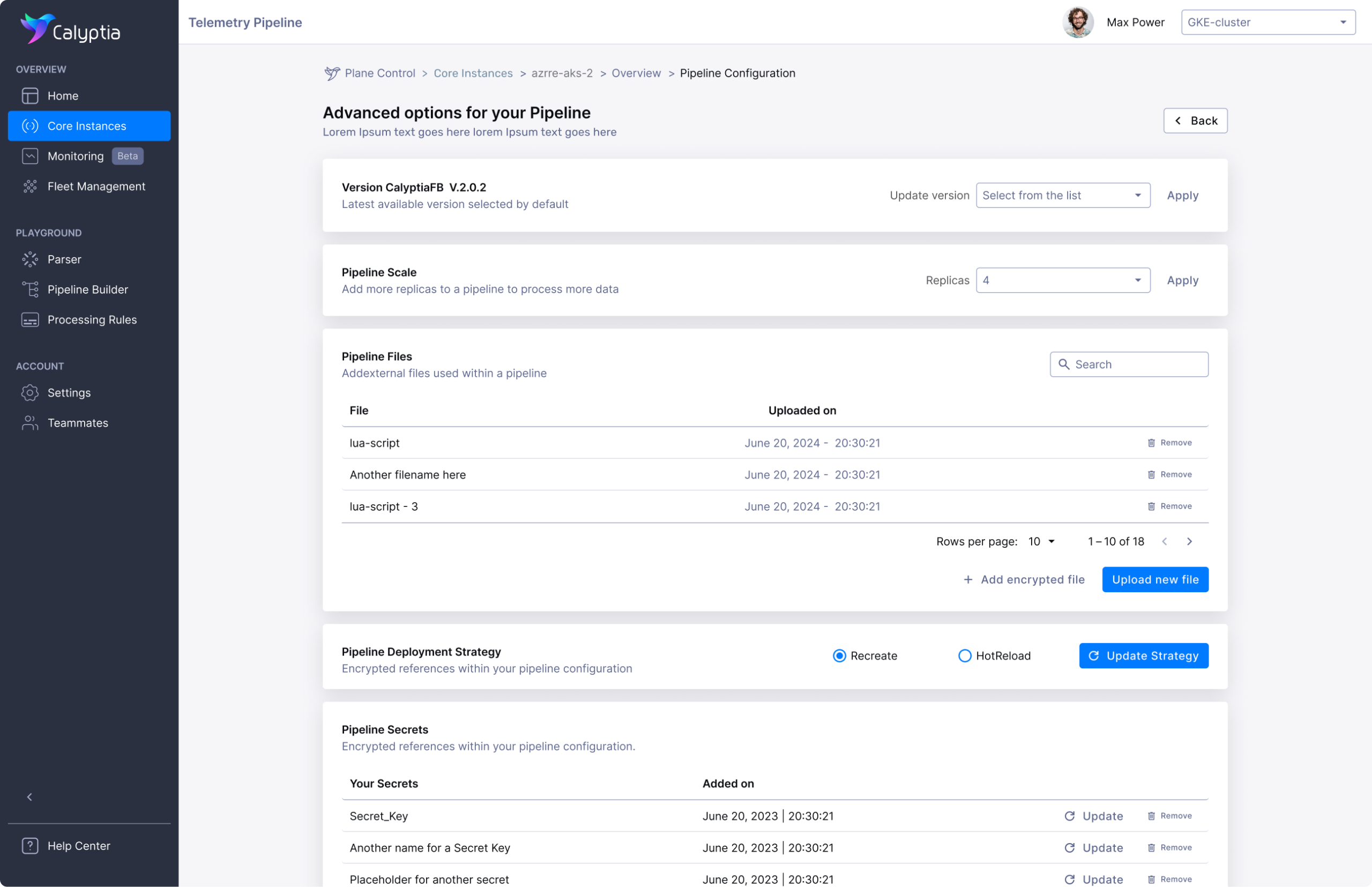
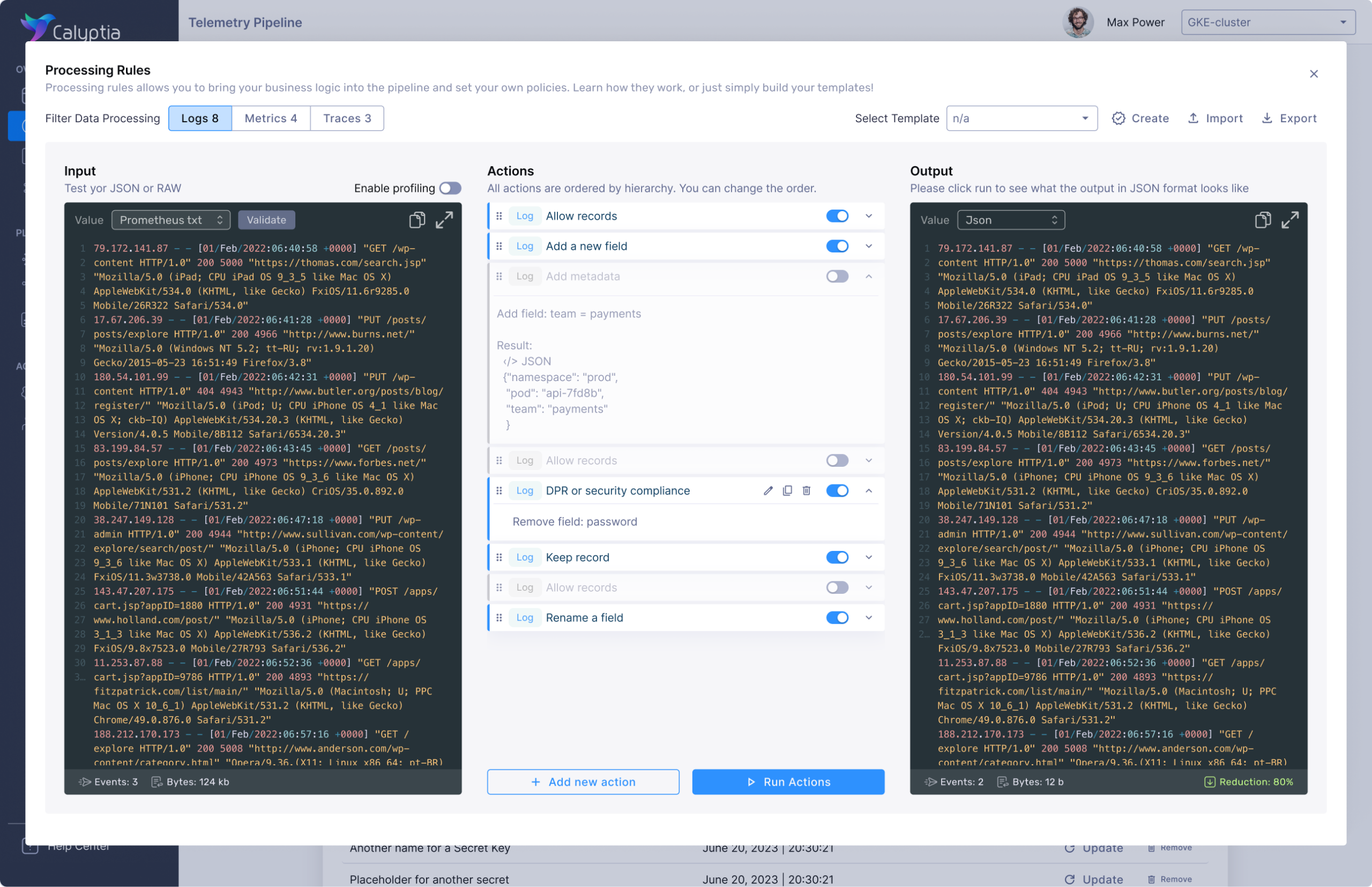
I started with the product because that's where users would form their first real opinion. I translated hand-drawn wireframes into a working design system in Figma — components, patterns, states — built to scale with an evolving product and a dev team that needed to move fast.
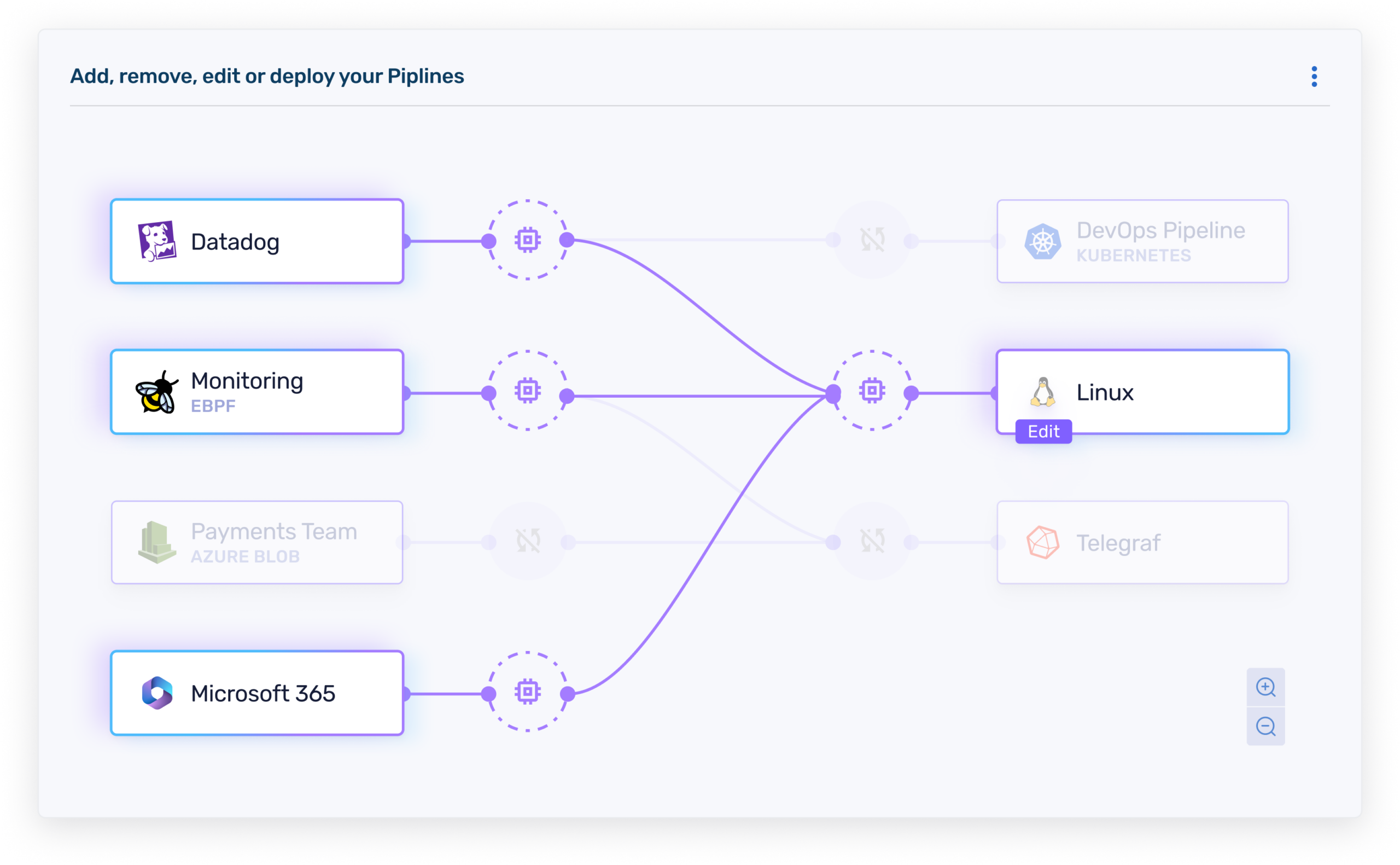
The pipeline editor — a signature interaction
The core of the product was how users built and managed data pipelines. Existing solutions were either CLI-based (too technical) or form-based (too slow). I designed a visual pipeline builder that became the product's most praised feature — applauded by the entire team and later replicated by competitors. It reduced cognitive load by making data flow visible, not just configurable.
Brand system — from product to identity
Once the product had a visual language, I built the brand around it. The goal wasn't to look like a DevOps tool — it was to look like the category leader in a space that had no category leader yet. Full visual identity: logo system, color language, typography, motion principles, and brand voice.
Fluent Bit — extending the system to open source
As the brand matured, Fluent Bit needed to evolve alongside it. I redesigned the Fluent Bit website and visual identity to reflect Calyptia's positioning while respecting the open-source community's culture — a balance between enterprise credibility and developer authenticity.
Design as a business asset
In January 2024, Chronosphere — a Series C company with $348M in funding backed by Greylock, General Atlantic, and Founders Fund — acquired Calyptia. The design work wasn't just a visual layer. It was part of the acquisition conversation.
Chronosphere's design team reached out directly during the process with detailed questions about how certain UI patterns were implemented. The pipeline editor, the design system architecture, the brand language — all of it was scrutinized and validated as something worth inheriting.
Post-acquisition: integrating two worlds
After the acquisition I spent a year inside Chronosphere, working with their Head of UX to integrate Calyptia's product into Chronosphere's platform. That meant reconciling two design systems, two brand languages, and two product philosophies — while keeping both user bases happy.
It was a different kind of challenge: instead of building from nothing, I had to translate what I'd built into someone else's system — without losing what made it work.
Key takeaways
- In early-stage startups, design is strategy. When you're the only designer, every decision shapes the company's positioning, not just its aesthetics. You can't separate visual choices from business choices.
- Technical users demand honesty. Engineers don't respond to marketing language in UI. The pipeline editor worked because it showed exactly what was happening — no abstraction theater, just clarity.
- Build for scrutiny from day one. When Chronosphere's design team reviewed the work during acquisition, they cared most about: can we understand it? Is it documented? Does it scale? That's not just a design standard — it's a due diligence standard.
- Open-source community and enterprise buyer are different audiences. The Fluent Bit redesign had to work for both. Respecting that tension — rather than picking one — is what made the brand coherent across contexts.